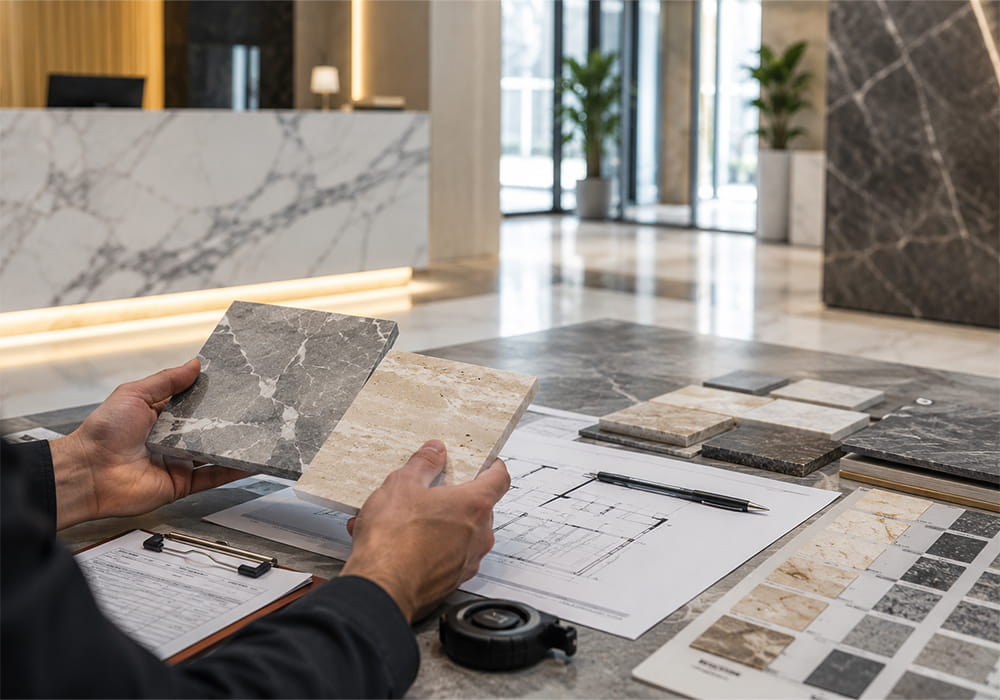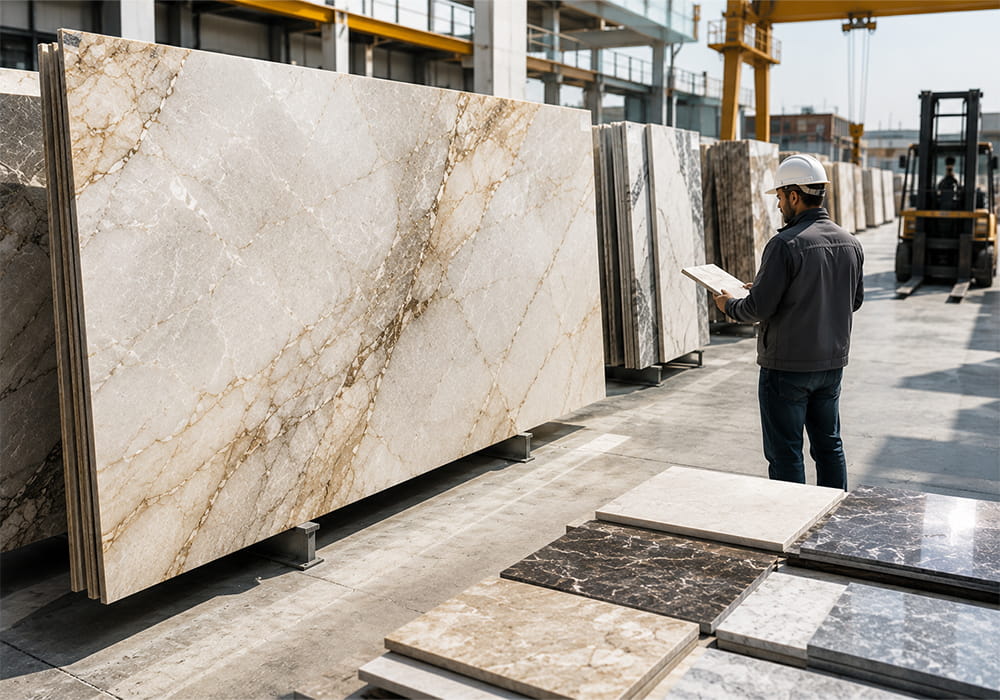

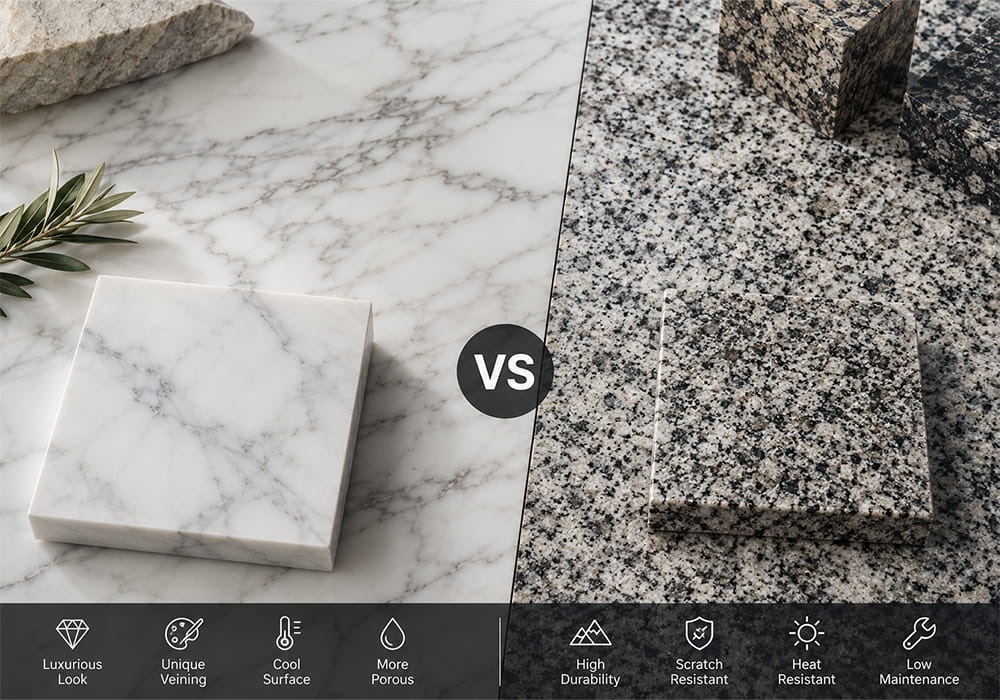
When selecting materials for a residential, commercial, or hospitality project, one of the most common questions is Marble vs Granite. Both are premium natural stones valued for their beauty, durability, and long-term performance, yet each offers distinct characteristics that make it more suitable for specific applications.
Whether you are an architect designing a luxury hotel, a contractor managing a commercial development, or a distributor sourcing materials for international clients, understanding the differences between marble and granite is essential for making the right investment.
Although both stones are formed naturally over millions of years, they differ in mineral composition, appearance, hardness, maintenance requirements, and overall performance. Choosing the wrong material may lead to unnecessary maintenance costs or limit the long-term durability of the finished project.
In this guide, we provide a complete natural stone comparison between marble and granite, covering everything from aesthetics and durability to maintenance, cost, and ideal applications. By the end of this article, you’ll have a clear understanding of which material is the best natural stone for your specific project.
Understanding Natural Stone
Before comparing marble and granite, it’s important to understand what makes natural stone unique.
Natural stone is extracted directly from quarries and processed into slabs, tiles, countertops, stair components, architectural elements, and decorative products. Unlike engineered materials, every piece of natural stone features unique veining, textures, and color variations created by nature over millions of years.
Among all natural stones, marble and granite remain two of the most widely used materials for architectural and interior design projects because they successfully combine beauty, durability, and long-term value.
What Is Marble?
Marble is a metamorphic rock formed when limestone is exposed to intense heat and pressure beneath the Earth’s surface. This natural process creates elegant veining patterns and soft color transitions that have made marble one of the most prestigious building materials throughout history.
Today, marble is widely used for:
- Luxury flooring
- Wall cladding
- Hotel lobbies
- Bathrooms
- Reception areas
- Staircases
- Fireplace surrounds
- Interior architectural features
- Decorative stone products
Its refined appearance makes marble the preferred choice for projects where aesthetics are the highest priority.
What Is Granite?
Granite is an igneous rock formed by the slow crystallization of magma beneath the Earth’s surface. Its dense mineral structure makes it one of the hardest and most durable natural stones available.
Granite is commonly selected for:
- Commercial flooring
- Kitchen countertops
- Outdoor paving
- Building facades
- Public spaces
- High-traffic areas
- Exterior staircases
- Landscape architecture
Because of its exceptional strength and resistance to scratches, moisture, and heavy use, granite is widely recognized as one of the most practical materials for demanding architectural applications.
Marble vs Granite: Appearance
One of the biggest differences between marble and granite lies in their visual characteristics.
Marble
Marble is admired for its flowing veins, soft movement, and luxurious elegance. Every slab is unique, making it ideal for creating sophisticated interiors with timeless appeal.
Popular marble colors include:
- White
- Cream
- Grey
- Black
- Beige
- Gold
These elegant tones make marble especially suitable for luxury residences, boutique hotels, premium retail spaces, and high-end hospitality projects.
Granite
Granite features a more granular texture with crystal-like mineral patterns distributed throughout the surface. Rather than dramatic veining, granite offers a consistent appearance with outstanding visual depth.
Common granite colors include:
- Black
- Grey
- Green
- Red
- Silver
- White
Its modern appearance makes granite a preferred option for commercial buildings, exterior applications, and contemporary architectural designs.
Marble vs Granite: Key Differences
Choosing between marble and granite depends on the specific requirements of your project. While both materials are premium natural stones, they perform differently in terms of durability, maintenance, appearance, and long-term use.
| Feature | Marble | Granite |
|---|---|---|
| Appearance | Elegant veining and luxurious patterns | Uniform crystal texture with natural depth |
| Hardness | Medium | Very High |
| Scratch Resistance | Moderate | Excellent |
| Heat Resistance | Very Good | Excellent |
| Water Resistance | Good (with sealing) | Excellent |
| Maintenance | Requires regular sealing | Low maintenance |
| Durability | Excellent for interiors | Excellent for indoor & outdoor use |
| Luxury Appeal | Exceptional | Modern and sophisticated |
| Best Applications | Interior spaces | High-traffic and exterior areas |
Although both stones offer exceptional value, this natural stone comparison demonstrates that each material excels in different environments.
Durability: Which Stone Lasts Longer?
Durability is often the deciding factor for architects, contractors, and developers when selecting materials for large-scale projects.
Marble
Marble is a durable natural stone that performs exceptionally well in interior environments. With proper care and routine sealing, marble surfaces can maintain their beauty for decades.
However, because marble is relatively softer than granite, it is more susceptible to scratches and acidic substances. For this reason, it is generally recommended for interior applications where elegance is the primary objective.
Ideal uses include:
- Hotel lobbies
- Luxury flooring
- Interior walls
- Bathrooms
- Fireplace surrounds
- Decorative architectural features
Granite
Granite is one of the hardest natural stones available, making it an outstanding choice for demanding environments.
Its dense mineral composition provides superior resistance to:
- Scratches
- Heavy foot traffic
- Moisture
- UV exposure
- Heat
- Weather conditions
This makes granite ideal for both residential and commercial projects where durability is essential.
Common applications include:
- Exterior cladding
- Commercial flooring
- Public buildings
- Kitchen countertops
- Outdoor staircases
- Landscape architecture
For projects exposed to heavy daily use, granite is often considered the best natural stone.
Marble vs Granite: Appearance & Design
When aesthetics are the priority, both stones offer completely different design experiences.
Marble Creates Timeless Luxury
Few materials can match the elegance of marble. Its flowing veins and natural movement create an exclusive appearance that immediately elevates any interior.
Marble is frequently chosen for:
- Luxury villas
- Five-star hotels
- Boutique hospitality
- Executive offices
- Premium retail spaces
- Designer bathrooms
Every slab is unique, giving architects the freedom to create one-of-a-kind spaces.
Granite Offers Contemporary Strength
Granite presents a cleaner and more consistent appearance with rich mineral textures rather than flowing veins.
Its modern character complements:
- Contemporary architecture
- Commercial developments
- Office buildings
- Airports
- Shopping centers
- Exterior facades
Granite combines visual appeal with exceptional practicality, making it one of the most versatile construction materials available.
Maintenance Comparison
Maintenance requirements are another important consideration during a Marble vs Granite evaluation.
Marble Maintenance
To preserve its polished appearance, marble should be sealed periodically and cleaned using pH-neutral stone cleaners.
Recommended maintenance:
- Clean spills immediately
- Avoid acidic chemicals
- Apply sealant when necessary
- Use soft cleaning materials
Proper maintenance allows marble to retain its luxurious finish for many years.
Granite Maintenance
Granite requires significantly less maintenance.
Routine cleaning with mild detergent is usually sufficient, while occasional sealing helps maintain long-term performance.
Its resistance to stains and scratches makes granite particularly attractive for busy commercial environments.
Cost Considerations
Price is an important factor, but it should never be the only factor.
Several elements influence the cost of natural stone:
- Stone rarity
- Block quality
- Slab size
- Surface finish
- Processing complexity
- Custom fabrication
- Shipping destination
- Packaging requirements
In general, premium marble varieties may command higher prices because of their unique veining and luxury appeal, while granite often provides excellent long-term value thanks to its durability and lower maintenance costs.
For commercial developments, evaluating the total lifecycle cost—not just the initial purchase price—leads to better investment decisions.
Which Stone Is Better for Different Projects?
There is no universal winner in the Marble vs Granite debate. The right choice depends entirely on the project requirements.
Choose Marble If You Need:
- Elegant luxury interiors
- Premium residential spaces
- Hotel lobbies
- Bathrooms
- Decorative wall cladding
- Statement architectural features
Choose Granite If You Need:
- Commercial flooring
- Exterior facades
- Outdoor landscaping
- Kitchen worktops
- Public spaces
- High-traffic environments
- Long-term durability with minimal maintenance
Selecting the right material ensures the finished project delivers both visual excellence and lasting performance.
How to Choose the Right Stone for Your Project
Choosing between marble and granite should never be based on appearance alone. Every project has unique functional, aesthetic, and technical requirements that influence the best material selection.
Before making a decision, consider the following questions:
Where Will the Stone Be Installed?
Interior and exterior environments require different performance characteristics. Marble is ideal for elegant indoor spaces, while granite performs exceptionally well in outdoor applications and high-traffic areas.
What Level of Traffic Will the Surface Receive?
For luxury residential interiors or boutique hotels, marble delivers unmatched sophistication. For shopping centers, office buildings, airports, and public spaces, granite offers superior resistance to daily wear.
What Design Style Are You Creating?
If your project emphasizes timeless elegance, natural veining, and refined luxury, marble is often the preferred choice.
If your goal is clean lines, contemporary aesthetics, and long-term durability, granite is an excellent solution.
What Is Your Maintenance Preference?
Projects that require minimal maintenance often benefit from granite, while premium residential and hospitality interiors frequently prioritize the luxurious appearance of marble despite its higher maintenance requirements.
Selecting the right material ultimately depends on balancing aesthetics, performance, maintenance, and budget.
Why Architects and Developers Choose Natural Stone
Natural stone continues to be one of the most trusted construction materials in modern architecture because it combines beauty with exceptional longevity.
Professional architects and developers choose natural stone because it offers:
- Timeless architectural value
- Premium visual appeal
- Long service life
- Sustainable natural material
- High property value
- Excellent durability
- Unique patterns in every slab
- Flexible design possibilities
- Compatibility with modern and classical architecture
Unlike synthetic materials, natural stone never looks identical from one piece to another, giving every project its own distinctive identity.
Recommended Applications
To simplify your decision, here’s a quick recommendation based on common project types:
Marble is Recommended For
- Luxury hotel lobbies
- High-end residential interiors
- Feature walls
- Bathroom walls and floors
- Fireplace surrounds
- Reception areas
- Premium staircases
- Decorative architectural details
Granite is Recommended For
- Commercial flooring
- Exterior facades
- Public spaces
- Outdoor landscaping
- Kitchen countertops
- Airports
- Shopping malls
- Office buildings
- High-traffic staircases
Why Quality Matters More Than Price
When comparing suppliers, it’s tempting to focus on the lowest quotation. However, the true value of natural stone lies in consistent quality, precise fabrication, and dependable service.
A trusted manufacturer provides:
- Careful stone selection
- Precision manufacturing
- Consistent color matching
- Accurate dimensions
- Professional finishing
- Secure export packaging
- Reliable production schedules
- Responsive customer support
These factors help reduce installation issues, minimize material waste, and improve the long-term success of every project.
Why Choose Sirstone?
At Sirstone, we supply premium natural stone solutions for architects, developers, contractors, distributors, and international buyers seeking exceptional quality and reliable service.
Our collections include carefully selected marble, granite, onyx, limestone, breccia, and custom architectural stone products manufactured to meet international standards. From slabs and tiles to handcrafted basins, stair components, columns, balusters, and bespoke stonework, every product is crafted with precision and attention to detail.
With advanced manufacturing capabilities, rigorous quality control, customized production, and professional export services, Sirstone supports projects of every scale—from luxury residences and hospitality developments to commercial buildings and public infrastructure.
Whether you’re sourcing natural stone for a single project or building a long-term supply partnership, our team is committed to delivering consistent quality, dependable logistics, and personalized customer support.
Final Thoughts
The Marble vs Granite decision is not about choosing one stone over the other—it’s about selecting the material that best fits your project’s goals.
Marble offers timeless elegance, distinctive veining, and luxurious appeal, making it ideal for premium interior spaces. Granite delivers exceptional strength, durability, and low maintenance, making it the preferred solution for demanding commercial and exterior applications.
Understanding the differences between these two natural stones allows architects, developers, contractors, and buyers to make informed decisions that balance aesthetics, functionality, and long-term value.
No matter which material you choose, partnering with an experienced supplier ensures your investment is supported by reliable manufacturing, professional quality control, and dependable international delivery.
Frequently Asked Questions
Is marble better than granite?
Neither is universally better. Marble is preferred for luxurious interiors, while granite is the better choice for high-traffic and outdoor applications due to its superior durability.
Which stone lasts longer?
Granite generally offers greater resistance to scratches, weather, and heavy use. However, properly maintained marble can also last for generations in interior environments.
Which natural stone requires less maintenance?
Granite requires less maintenance because it is denser and more resistant to staining and scratching. Marble benefits from periodic sealing and proper care to maintain its appearance.
Can marble and granite be used together?
Yes. Many luxury architectural projects combine marble and granite to take advantage of the elegance of marble and the durability of granite, creating balanced and visually striking designs.
Find the Perfect Natural Stone for Your Next Project
Whether you’re planning a luxury residence, hospitality development, commercial building, or large-scale construction project, Sirstone offers premium natural stone solutions tailored to your exact requirements.
Explore our marble and granite collections or contact our team for expert guidance, customized solutions, and a competitive quotation.