
The global demand for premium natural stone continues to grow as architects, developers, contractors, and distributors seek durable, elegant, and sustainable materials for residential, commercial, and hospitality projects. Whether you’re sourcing marble for luxury interiors, granite for high-traffic spaces, or onyx for statement designs, knowing how to import natural stone successfully is essential for achieving consistent quality and long-term business success.
Choosing the right natural stone supplier is about far more than finding competitive prices. Reliable manufacturers provide stable production capacity, professional quality control, secure export packaging, transparent communication, and dependable logistics that reduce risks throughout the purchasing process.
For international buyers, every stage of the supply chain matters—from selecting the right stone and verifying technical specifications to ensuring safe shipping and on-time delivery. A well-organized natural stone export process not only protects your investment but also helps projects stay on schedule while maintaining the highest construction standards.
This guide explains every step involved in importing natural stone professionally, helping importers, wholesalers, developers, architects, and construction companies make informed purchasing decisions with confidence.
Why Import Natural Stone?
Natural stone has remained one of the world’s most desirable construction materials for centuries. Unlike artificial materials, every slab carries unique veining, natural textures, and distinctive colors that cannot be replicated. This individuality adds long-term value to architectural projects while offering exceptional durability and timeless elegance.
Today, natural stone is widely used in:
- Luxury residential developments
- Hotels and resorts
- Commercial buildings
- Shopping malls
- Public spaces
- Office towers
- Healthcare facilities
- High-end retail projects
- Landscape architecture
- Interior design projects
For professional buyers, importing directly from an experienced manufacturer often provides several important advantages:
- Better product consistency
- Greater design flexibility
- Competitive wholesale pricing
- Larger production capacity
- Custom fabrication services
- Reliable international logistics
- Professional technical support
These benefits make direct sourcing an increasingly popular strategy for companies involved in large-scale construction and architectural projects.
Step 1: Define Your Project Requirements Before Importing
Before contacting any natural stone supplier, clearly define your project’s technical and commercial requirements. Proper planning reduces purchasing mistakes, improves communication, and accelerates production.
Consider the following factors:
Stone Type
Select the most suitable material based on the project application:
- Marble
- Onyx
- Granite
- Limestone
- Travertine
- Breccia
Each stone offers unique characteristics in terms of appearance, durability, maintenance, and performance.
Dimensions
Determine the required formats, including:
- Slabs
- Tiles
- Blocks
- Cut-to-size pieces
- Stair components
- Countertops
- Architectural elements
Surface Finish
Different finishes create different visual effects and functional performance:
- Polished
- Honed
- Leathered
- Brushed
- Flamed
- Bush Hammered
Quantity
Estimate the total project volume, including additional material for cutting, installation, and future maintenance.
Budget
A realistic budget should include:
- Material cost
- Processing
- Packaging
- Shipping
- Customs duties
- Local transportation
Having these details prepared allows suppliers to provide accurate quotations while reducing unnecessary revisions during the procurement process.
Step 2: Choose a Reliable Natural Stone Supplier
Selecting the right natural stone supplier is the single most important decision during the import process. A trusted supplier becomes a long-term business partner rather than simply a product vendor.
When evaluating suppliers, consider the following criteria:
Manufacturing Capability
A professional supplier should operate modern production facilities capable of delivering consistent quality and meeting large-volume orders without delays.
Quality Control
Ask about inspection procedures throughout production, including block selection, cutting accuracy, polishing quality, dimensional tolerance, and final inspection before shipment.
Product Variety
Working with a supplier offering multiple stone categories allows you to source complete project requirements from one reliable partner, simplifying purchasing and logistics.
Custom Manufacturing
Many architectural projects require customized dimensions, finishes, edge profiles, or bespoke stone products. Ensure your supplier can provide tailored manufacturing solutions.
Export Experience
Companies with established natural stone export experience understand international documentation, export packaging, container loading, and shipping requirements, reducing the risk of costly delays.
Step 3: Verify Stone Quality Before Placing an Order
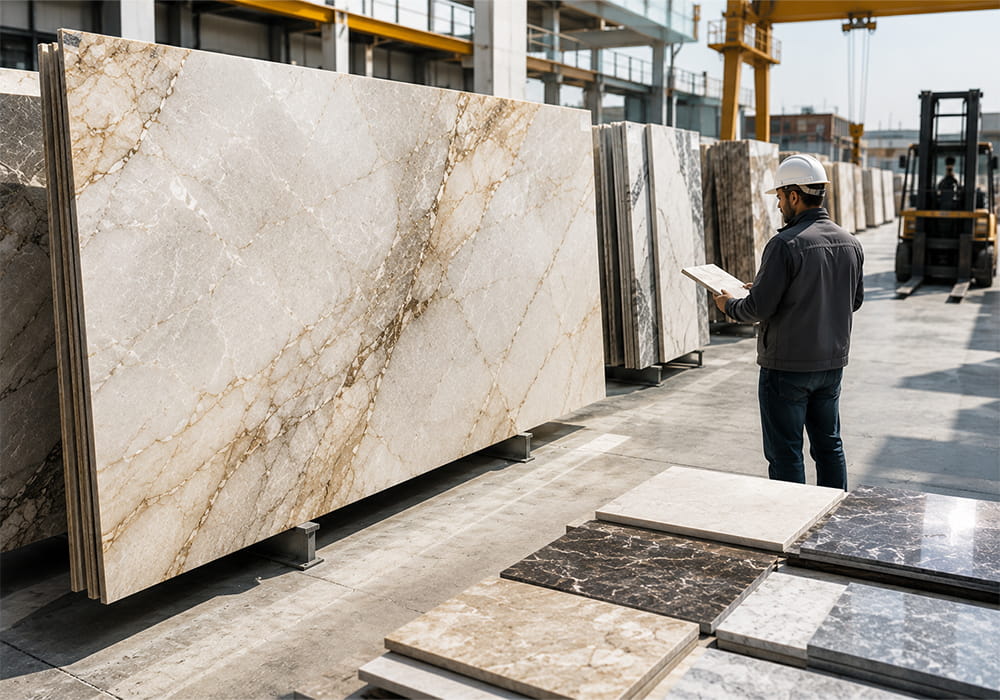
One of the biggest challenges when you import natural stone is ensuring that the material you receive matches your expectations. Since every natural stone is unique, professional inspection before production and shipment is essential.
A reputable natural stone supplier should provide complete product information, including:
- High-resolution photos and videos
- Slab layouts and block images
- Technical specifications
- Surface finish details
- Dimensional tolerances
- Color consistency
- Material availability
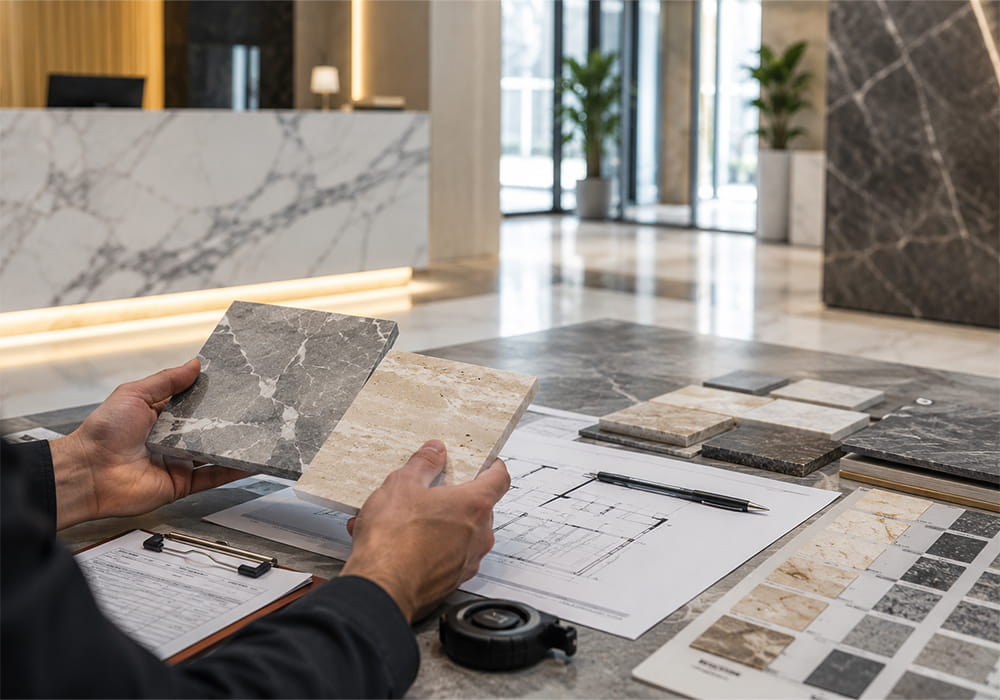
For large commercial projects, requesting physical samples before production is highly recommended. This allows architects, designers, and project managers to evaluate the stone’s texture, color, finish, and overall appearance before approving the final order.
Professional suppliers also perform quality inspections throughout the manufacturing process to ensure consistency across every slab, tile, or custom stone component.
Step 4: Understand Surface Finishes
The same natural stone can look completely different depending on its surface finish. Selecting the right finish is just as important as choosing the stone itself.
Polished Finish
A polished finish creates a glossy surface that enhances color depth and highlights natural veining. It is widely used in luxury interiors, hotel lobbies, bathrooms, reception areas, and premium residential spaces.
Honed Finish
Honed stone has a smooth matte appearance that provides a softer and more contemporary look. It is commonly selected for modern interiors, flooring, and wall cladding.
Leather Finish
Leathered stone offers a textured surface with a refined natural appearance. It combines visual depth with improved slip resistance, making it suitable for both residential and commercial applications.
Flamed Finish
Typically applied to granite, a flamed finish produces a rough, slip-resistant surface ideal for outdoor paving, staircases, terraces, and public spaces.
Choosing the correct finish improves not only the visual appeal of the project but also long-term durability, maintenance, and user safety.
Step 5: Evaluate Production Capacity
Large construction projects require more than beautiful materials—they require reliable production.
Before working with a natural stone supplier, ask important questions such as:
- What is your monthly production capacity?
- Can you supply multiple containers consistently?
- How do you maintain color consistency across large orders?
- What is your average production lead time?
- Can you handle custom fabrication?
Reliable manufacturers invest in modern machinery, experienced technicians, and strict production planning to ensure every shipment arrives on time and meets project specifications.
For developers and contractors, stable production capacity often determines whether a project stays on schedule.
Step 6: Packaging Matters More Than You Think
Natural stone is durable, but it must be protected during transportation.
Professional natural stone export companies use export-grade packaging designed to prevent damage throughout international shipping.
High-quality packaging typically includes:
- Heat-treated wooden crates
- Reinforced internal supports
- Protective foam separators
- Plastic moisture protection
- Edge protection
- Strong pallet structures
- Clear shipment labeling
Proper packaging minimizes the risk of breakage, reduces replacement costs, and ensures products arrive ready for installation.
When comparing suppliers, packaging quality should be considered just as important as the product itself.
Step 7: International Shipping & Export Documentation
Successful natural stone export depends on accurate documentation and efficient logistics.
An experienced exporter should assist buyers with all necessary shipping documents, including:
- Commercial Invoice
- Packing List
- Bill of Lading
- Certificate of Origin (when required)
- Inspection documents
- Customs documentation
The supplier should also coordinate container loading to maximize space utilization while protecting the stone during transportation.
Efficient logistics reduce delays, simplify customs clearance, and improve overall project planning.
Step 8: Why Long-Term Partnerships Matter
Many successful construction companies choose to work with the same natural stone supplier for years rather than switching suppliers for every project.
A long-term partnership offers significant advantages:
- Consistent product quality
- Faster quotations
- Better communication
- Stable pricing
- Priority production scheduling
- Simplified logistics
- Reliable after-sales support
Instead of treating stone procurement as a one-time purchase, leading developers view their supplier as a strategic partner that contributes to project success.
Step 9: Common Mistakes When Importing Natural Stone
Importing natural stone is a valuable investment, but overlooking a few critical details can lead to costly delays, quality issues, and unexpected expenses. Whether you’re purchasing for a residential development or a large commercial project, avoiding these common mistakes will help ensure a smooth procurement process.
Choosing Price Over Quality
Low prices can be attractive, but they often come with compromises in material quality, processing accuracy, or packaging. Instead of focusing solely on cost, evaluate the supplier’s manufacturing standards, quality control procedures, and export experience.
Ignoring Material Variations
Natural stone is a product of nature, meaning no two slabs are exactly alike. Variations in veining, color, and texture are normal and contribute to the beauty of the material. Reviewing slab photos or requesting samples before production helps set clear expectations.
Not Reviewing Technical Specifications
Always confirm dimensions, thickness, tolerances, finishes, and edge profiles before production begins. Clear technical documentation minimizes misunderstandings and ensures the finished products meet project requirements.
Underestimating Shipping Requirements
Improper packaging or poor container loading can damage stone products during transit. An experienced supplier will use export-grade packaging and optimized loading methods to protect every shipment.
Working with Inexperienced Suppliers
Selecting a supplier without proven natural stone export experience may result in communication problems, documentation errors, inconsistent production, and shipment delays. Partnering with an established manufacturer significantly reduces these risks.
Step 10: Quality Control Throughout the Production Process
Consistent quality is one of the most important factors when you import natural stone for professional projects. Reliable manufacturers implement strict quality control procedures at every stage of production to ensure that every shipment meets international standards.
A comprehensive quality control process typically includes:
Raw Material Selection
Premium projects begin with carefully selected stone blocks that are inspected for structural integrity, color consistency, and natural characteristics before processing.
Precision Cutting
Advanced CNC machinery and modern cutting equipment ensure accurate dimensions, straight edges, and minimal material variation throughout production.
Surface Inspection
Each slab, tile, or architectural element is inspected to verify polishing quality, surface finish, and overall appearance before moving to the next stage.
Dimensional Verification
Every component is measured to confirm compliance with project drawings and manufacturing tolerances.
Final Inspection Before Shipment
Before packaging, finished products undergo a final quality inspection to verify appearance, dimensions, labeling, and packaging readiness.
This systematic approach ensures buyers receive products that are ready for installation with minimal on-site adjustments.
Why Sourcing Directly from a Manufacturer Makes a Difference
Working directly with a manufacturer instead of multiple intermediaries provides significant advantages for international buyers.
A direct manufacturing partner offers:
- Better communication throughout the project
- Greater control over production quality
- Faster response times
- Competitive wholesale pricing
- Flexible customization
- Reliable production schedules
- Professional export coordination
- Consistent supply for future projects
For developers, distributors, and contractors managing multiple projects, establishing a long-term relationship with a trusted natural stone supplier creates greater efficiency and long-term value.
Why Choose Sirstone?
At Sirstone, we specialize in supplying premium natural stone and custom architectural stone solutions for international markets. Our product portfolio includes marble, onyx, limestone, granite, breccia, handcrafted stone basins, stone vanities, stair components, columns, balusters, and bespoke architectural products manufactured to meet the highest standards of quality and precision.
Every order is supported by careful material selection, advanced manufacturing technology, strict quality control, and professional export services. From quotation to final delivery, our team works closely with clients to ensure every project receives the attention, consistency, and reliability it deserves.
Whether you are an importer, wholesaler, architect, contractor, or property developer, Sirstone is committed to delivering premium natural stone solutions that combine timeless beauty with dependable performance for projects around the world.
Conclusion
Successfully importing natural stone requires more than selecting an attractive material. It involves choosing the right supplier, verifying quality standards, understanding production capabilities, ensuring proper packaging, and working with a partner experienced in international export.
By following the steps outlined in this guide, buyers can reduce procurement risks, improve project efficiency, and build long-term relationships with reliable manufacturers. Choosing an experienced natural stone supplier ensures not only premium products but also consistent service, professional communication, and dependable global delivery.
At Sirstone, we believe every successful project begins with quality materials, expert craftsmanship, and trusted partnerships. Whether your project requires natural stone slabs, custom architectural elements, or handcrafted stone products, our team is ready to support your business with reliable solutions tailored to your needs.
Frequently Asked Questions
How do I choose the right natural stone supplier?
Look for manufacturers with proven export experience, strict quality control, modern production facilities, customization capabilities, and transparent communication.
What is the best packaging method for natural stone export?
Export-grade wooden crates with reinforced protection, moisture barriers, foam padding, and secure container loading provide the highest level of protection during international shipping.
Can natural stone products be customized?
Yes. Most professional manufacturers offer custom dimensions, surface finishes, edge profiles, and bespoke architectural stone products based on project drawings.
Which natural stone is best for commercial projects?
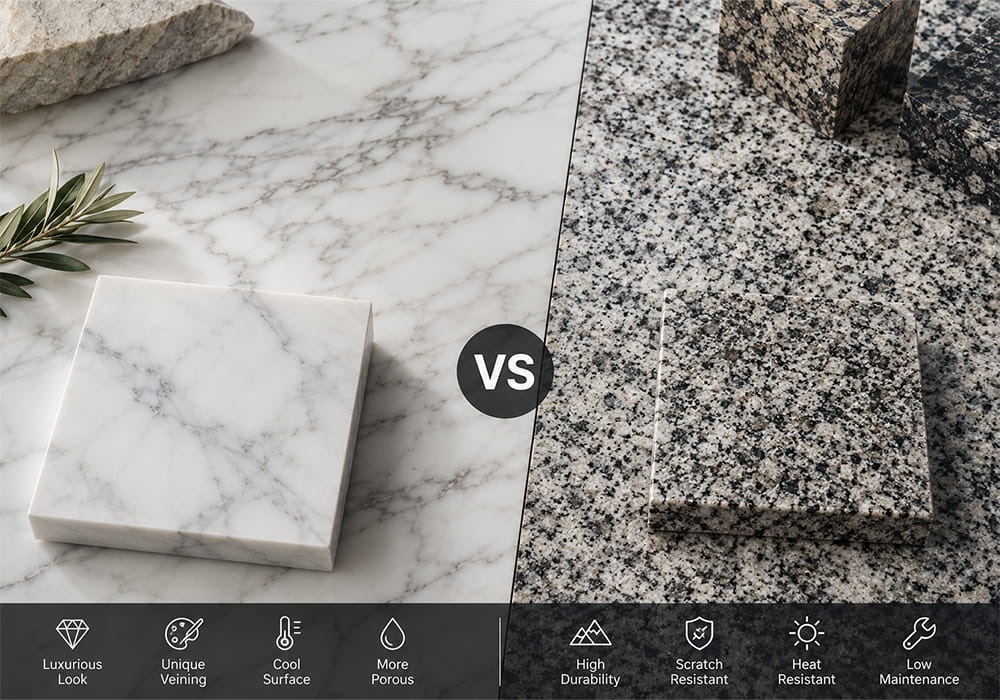
The ideal material depends on the application. Marble offers luxury and elegance, granite provides exceptional durability, limestone creates timeless architectural appeal, while onyx delivers unique decorative features.
Ready to Source Premium Natural Stone?
Partner with Sirstone for reliable natural stone supply, custom manufacturing, and professional export services. Contact our team today to discuss your project requirements and request a personalized quotation.